


Tartar on teeth: impact on health and solutions
Published on (Updated on )
7 min read

Summarize this article with AI


Summary
Dental tartar is a common problem that affects the oral health of many people. This article explores what tartar is, how it forms, associated symptoms, and the best methods to prevent and remove it.
What is dental tartar?
Tartar, also called dental calculus , is a buildup of hardened plaque that adheres firmly to the teeth and under the gum line. Made up of minerals found in saliva and food debris, this substance is much more stubborn than dental plaque and often requires professional intervention to be removed. Its formation begins with dental plaque, a sticky film of bacteria that constantly forms on the teeth. If plaque is not removed regularly, it will harden and turn into tartar in just a few days.
How does tartar form on teeth?
Tartar formation begins with dental plaque, a film of bacteria and sugars that continually forms on the teeth. When not removed by brushing and flossing , plaque mineralizes due to minerals in saliva, turning into tartar. This mineralization process often begins in less than 24 hours, making regular oral health maintenance crucial.
What are the symptoms of dental tartar?
It has several recognizable symptoms:
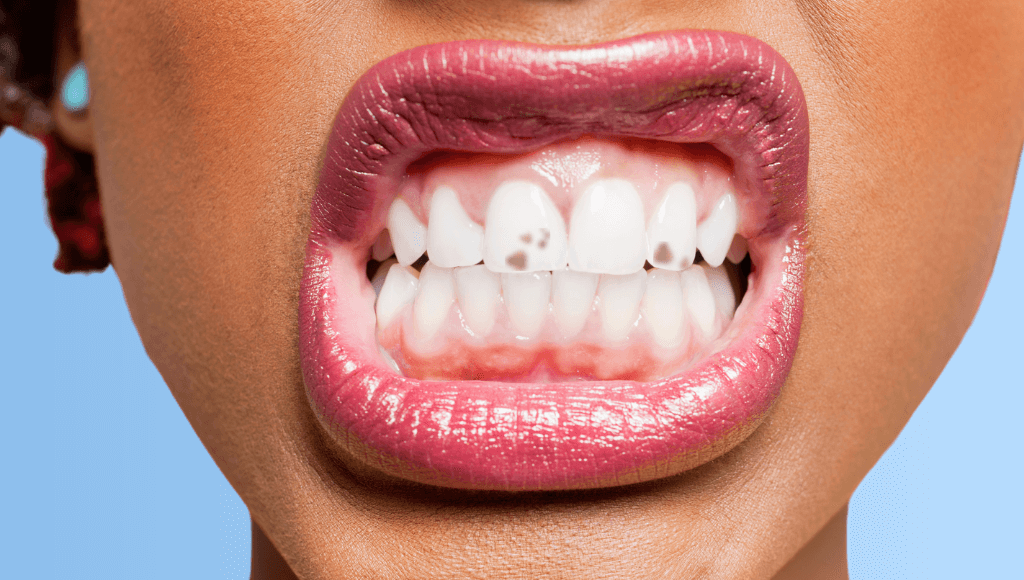
- Change in tooth color : Tartar can appear as a visible discoloration on the teeth, ranging from yellow to brown.
- Irritated and inflamed gums: Buildup can cause gingivitis , an inflammation of the gums manifested by redness , swelling and bleeding .
- Persistent bad breath : Bacteria trapped in tartar can produce compounds that cause chronic bad breath .
- Tooth sensitivity : Tartar below the gum line can expose the roots of teeth, making them more sensitive.
- Periodontal problems : In the long term, it can cause more serious periodontal diseases, such as periodontitis , leading to tooth loss.
What are the causes of dental tartar?
Tartar buildup is primarily due to poor oral hygiene, but other factors can also play a role.
Poor oral habits can easily lead to gum recession. By this we mean occasional or excessive tooth brushing. This also results in the consumption of foods that can cause a problem of hypersensitivity in the teeth. This causes dental plaque to form. In the absence of adequate treatment, it turns into tartar by feeding on bacteria present in the mouth. 😷 These are the prerequisites for dental caries and gum recession . Many other factors such as smoking can lead to gum recession.
What are the links with periodontitis?
By definition, periodontitis refers to a serious condition characterized by inflammation of the tissues surrounding and supporting the teeth . All of these tissues are called “the periodontium”. It is essentially composed of:
The gum
Alveolar bone
periodonts
The alveolar-dental ligament
Cement
Caused by bacteria, periodontal disease can affect several or just one of these tissues. When they only attack the gums, we speak of gingivitis .
This is manifested by inflammation of the gums. These show signs of redness and irritation, sometimes swelling and pain. Furthermore, the gums bleed when brushing your teeth or when you eat certain foods. 🪥
But when the disorder concerns other tissues, we speak of periodontitis. The latter can turn into severe periodontitis and cause periodontal recession .
How to treat receding gums?
Tartar buildup is primarily due to poor oral hygiene, but other factors can also play a role.
Factors related to dental hygiene
Inadequate oral hygiene is the main cause of tartar buildup. Insufficient brushing, poor brushing technique, forgetting to floss, and not using interdental brushes all contribute to tartar formation.
Influence of saliva pH
The pH of saliva influences its formation. Too acidic, it encourages the proliferation of bacteria, while saliva that is too basic favors the precipitation of the minerals present.
Impact of lifestyle habits
Certain lifestyle habits increase the risk of tartar formation:
- Smoking : Reduces saliva production and promotes tartar accumulation.
- Food rich in sugars and starches : Feeds the bacteria responsible for dental plaque.
- Alcohol consumption : May dry out the mouth, reducing the ability of saliva to remove plaque.
- Insufficient hydration : Limits the production of saliva needed to clean teeth.
What are the consequences of tartar on the teeth?
Oral health issues
Tartar buildup can cause various oral health problems:
- Gingivitis : Inflammation of the gums due to irritation caused by tartar.
- Periodontitis : Gum disease that damages the tissues supporting the teeth.
- Dental caries : traps bacteria that produce acids, causing cavities .
- Discolored teeth : May appear as yellow or brown spots.
General health risks
It can also have repercussions on general health:
- Cardiovascular disease : Bacteria found in tartar can enter the bloodstream, contributing to inflammation and hardening of the arteries.
- Diabetes : Gum infections can make it more difficult to control blood sugar levels.
- Respiratory infections : Bacteria from the mouth can be inhaled into the lungs, causing respiratory infections.
How to prevent the appearance of tartar on the teeth?
Prevention techniques
- Regular brushing : Brush your teeth at least twice a day with a sonic electric toothbrush .
- Flossing : Floss daily to remove plaque between teeth.
- Interdental brushes : Use interdental brushes to clean spaces between teeth.
Importance of good dental hygiene
Maintaining good dental hygiene is essential to preventing tartar formation. Use proper brushing techniques and appropriate dental care products.
Food and lifestyle habits
Adopt a healthy diet and positive lifestyle habits:
- Limit sugars and starches.
- Drink plenty of water to help rinse away food debris.
- Avoid tobacco and alcohol.
How to remove tartar from teeth?
Professional methods
Scaling at the dentist
Scaling is a common procedure performed by dentists to remove tartar. The dentist uses specialized tools to break it up and remove it, then polishes the teeth to smooth their surface.
Natural methods and home tips
How to remove tartar without going to the dentist?
- Brushing with baking soda : Mix a small amount of baking soda with water to create a paste and brush your teeth with it.
- Using coconut oil : Do oil pulling with coconut oil to reduce bacteria.
- Apple cider vinegar : Rinse your mouth with diluted apple cider vinegar to help dissolve plaque.
Can tartar be removed on its own?
No, it can't come off on its own. It requires professional methods or specific mechanical interventions.
How to scale your teeth naturally?
- Hydration : Drink plenty of water to flush away food debris.
- Consumption of crunchy fruits and vegetables : Crunchy foods like apples and carrots can help clean teeth.
- Sugar-free chewing gum : Chewing sugar-free gum stimulates saliva production.
Conclusion
Prevention and treatment of dental tartar requires good oral hygiene and regular professional care. By using quality products like sonic electric toothbrushes , floss and interdental brushes from Myvariations, you can maintain healthy teeth and prevent tartar build-up.

Maÿlis Pircher
Looking for the perfect toothbrush?
Say goodbye to bleeding gums and other gum problems thanks to MyVariations' 5 different brushing modes that adapt to your sensitivity! 🖐

Electric Toothbrush


